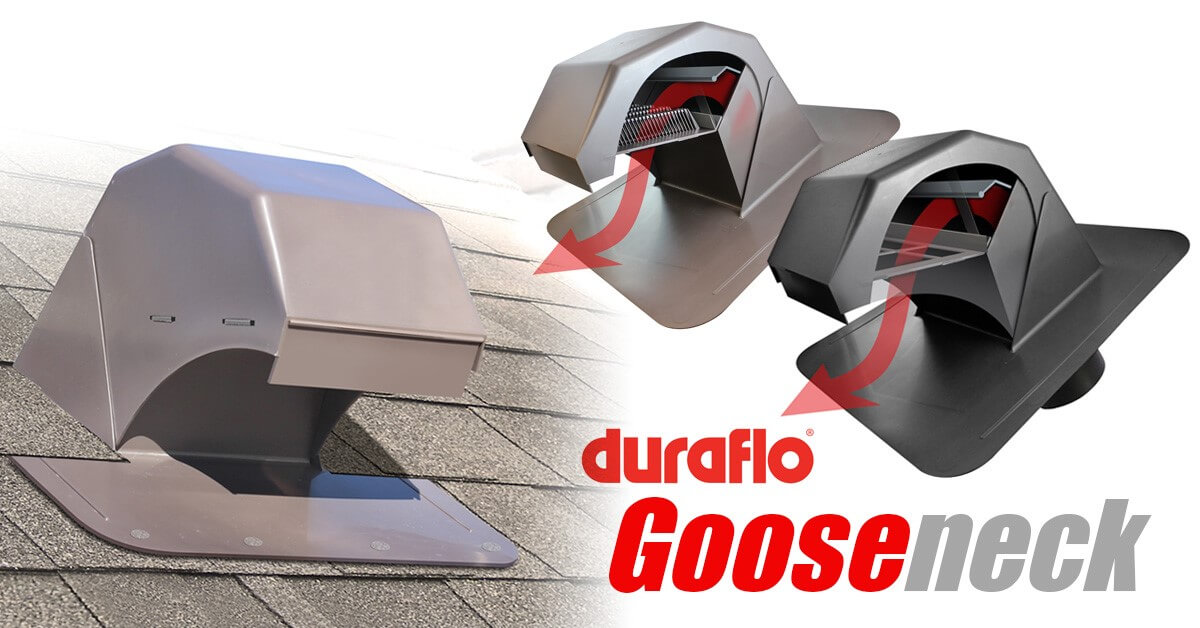








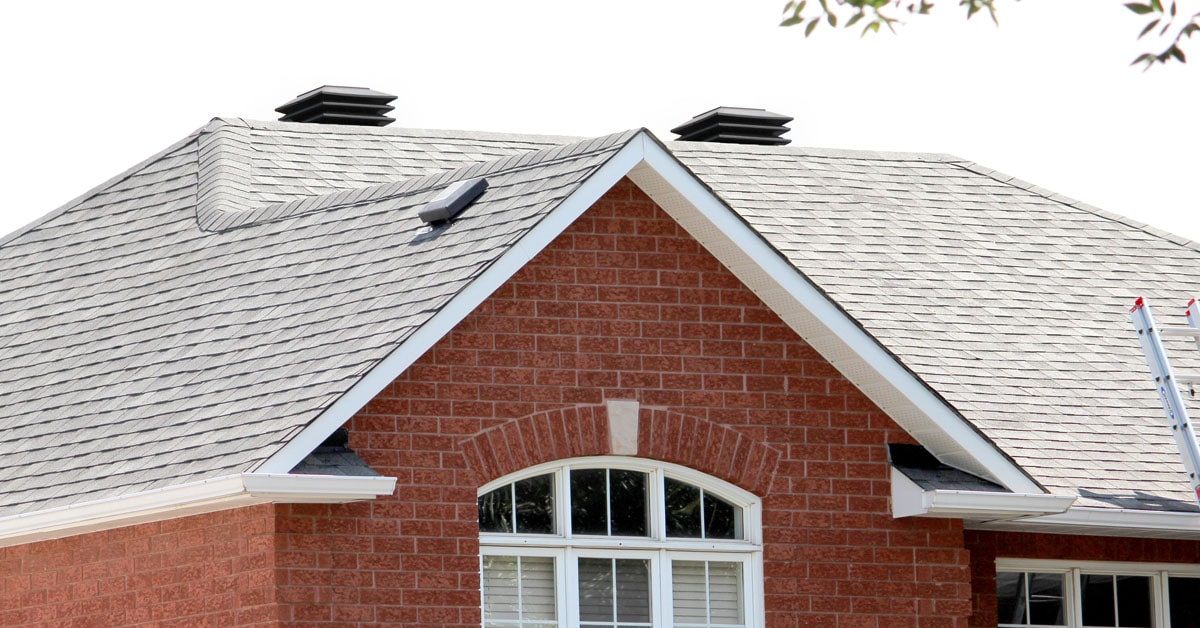
Home design is changing and so are the ways in which we need to choose our ventilation. Here are a few steps to make sure you’re choosing the right ventilation for your home.
Roof Type
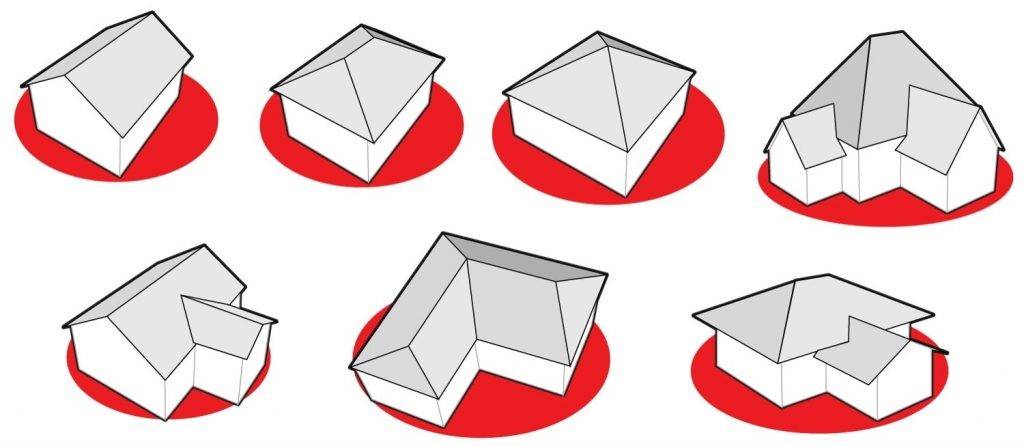
Gable Style Roof
For this type of roof, the contractor can decide whether they want to use ridge vents or roof vents. This depends on their personal preference, as well as the net free area of your attic. You can calculate the ventilation requirements for your home here.
Limited or Pyramid Hip Roof
This type of roof has a limited amount of space to work with. With limited space, it’s a good idea to use a taller vent. This way, you will need fewer of them on your rooftop. If you need more than one tall vent on these types of roofs, you want to ensure that the vents are not directly across from each other. Spreading them out will make sure that air is drawing from the soffit vents at the bottom of your roof.
Winged Gable Roof, Hip & Valley Roof or Intersecting/Overlaid Hip Roof
If your rooftops have gables, hips and valleys, you have options available to you. For an all-open attic space, you should be using square vents at the peaks of your roof. If it’s a closed-off space, you may need to add square vents on each mixed portion of the roof. You also have the option of using ridge vents for each peak in a gable-style roof, instead of square vents. The taller the peak, the taller you’re going to want your roof vents to be. If you end up needing two tall vents to cover your attic area, it’s important to ensure that they’re not across from each other— as with the Limited Hip Roof or Peak at Top Roof. This way, you can make sure that air is being drawn from the soffits instead of exchanging air with each other.
Colour
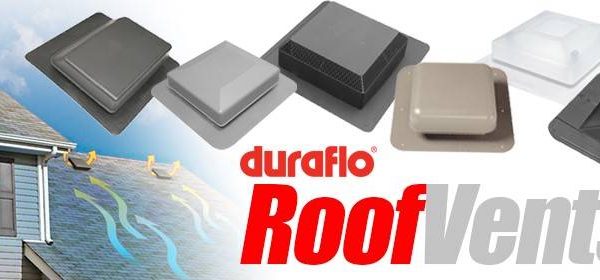
It’s a good idea to match the colours of your roof vents with the colour of your rooftop. This will add to the aesthetic value of your home. Duraflo roof vents come in four colours that blend in with typical roof types:
- Black
- Brown
- Weatherwood
- Grey
Number of Vents Needed
It is important to install the right number of vents to avoid moisture accumulation and damage to your home. We don’t recommend mixing vent types and it’s not necessary to use different styles of vents to properly vent your home. We also recommend that 50 percent of your vents are soffit vents, and 50 percent are exhaust vents in order to keep air flowing properly through your home.
Climate
Despite all of the features and styles mentioned above, different climates have different ventilation requirements.Northern Ontario typically gets heavier snowfall than many other places in North America. Because this heavy snow stays on rooftops for a longer period of time, we usually recommend installing taller vents that will stay above the snow line. If your square vents are working properly, they should clear a path in the snow for air to flow through.In climates with heavier rainfall, we usually recommend our WeatherPRO vents. These include proper drainage openings that direct rain down the rooftop, and away from the inside of your home.